Starting Today, New Yorkers Can ‘Subscribe’ to an E-Scooter
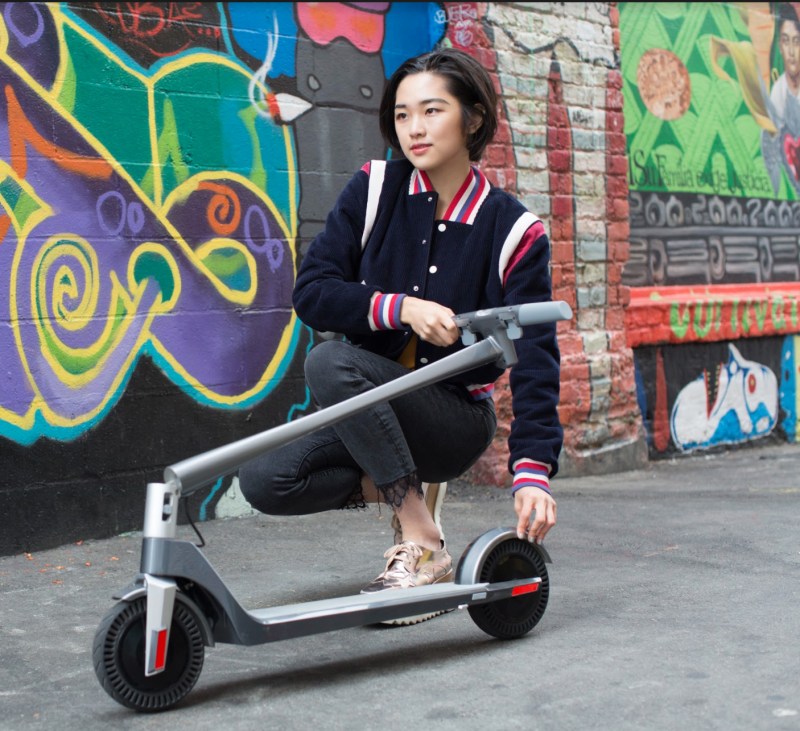
A new micromobility company is betting that COVID-wary travelers will pay more to rent their own personal e-scooter by the month rather than sharing dockless scooters with strangers and paying by the trip. But low-income riders will probably be left out of the fun.
Starting today, high-end electric scooter company Unagi will allow riders in New York City and Los Angeles to lease their vehicles for a monthly subscription of $39. A new subscriber will receive a fully assembled cycle within 24 hours — “just like Netflix,” the company notes — and then her new whip will be hers to keep, ride, and even stash in her apartment until she cancels her membership. The scooter weighs just 23 pounds, folds down for easy schlepping up apartment staircases, and has a host of glowing user reviews.
And if it breaks, the company promises it will pick up and replace the scooter in less than a day.
The Oakland-based start up isn’t the first company to offer long-term e-scooter rentals, but it may be the first to provide scooters that are designed to be ridden daily — at least without needing constant repair.
In their early days on U.S. streets, dockless scooters famously had a lifespan of just one to three months; micromobility companies say they’re always making designs more durable, but there’s little available data on how long the latest models actually last. Unagi’s business model hopes to beat the lifespan of the average shared scooter through both sturdy, top-flight design — buying an Unagi outright costs a cool $990 — and by reducing the number of daily trips per vehicle through a one-user-at-time leasing model.
“We wanted a Tesla-quality electric scooter created for ownership, one that people would be proud to ride and happy to bring into their homes,” the company said in a statement. “That didn’t exist – so we built it ourselves.”
Even without all the Elon Musk-y bells and whistles, long-term e-scooter leases have been popular among consumers in the past. Bird has a waitlist for its own unlimited subscription option, whose price hovers around $59.99 a month and is only available in Miami, San Francisco and Washington D.C. (Lucky folks in the Bay Area may be able to get one for as little as $24.99). The cost of Lime’s subscription option, Limepass, is reportedly a lot cheaper on the whole — consumers have been able to score up to five rides a day for as little as $14.99 a month — but also isn’t available everywhere the company runs fleets.
But even the cheapest scooter leases out there are still largely out of reach for the low-income riders who could likely use them most — especially during the pandemic.
As COVID-19 fears continue to scare riders off of transit, scooter trips have gotten lengthened, especially among those who have taken advantage of free rides and steep discount programs offered to essential workers. Those discounts were even more attractive in light of perennially weak subsidies for transit passes available to low-income riders: a 30-day unlimited pass under under New York’s Fair Fares program still costs $61 a month to each member of a family of three making less than $21,720 a year, and Los Angeles’ LIFE pass program for low-income riders is $76 per month.
Leasing an Unagi for $39 a month sounds like a good deal compared to those numbers — and something that poor city dwellers can actually afford. But there are downsides: scooters still require riders to commute uncovered in bad weather, something some commuters simply aren’t willing to do. Scooters also tend to be unpopular among Black and Latinx ridersfor reasons the industry is just beginning to unravel, and it’s not clear that a leasing model will decrease the disparity. And the price of an Unagi subscription doesn’t stack up well against all green transportation modes: traditional, pedal-powered bikeshare programs in both New York and Los Angeles offer monthly passes for as little as $5 a month. (Both cities now offer e-bike options, but charge a per-ride premium to use them.)
Still, electric assist vehicles like scooters and e-bikes have a unique appeal for certain riders who otherwise wouldn’t choose sustainable transportation, including people with physical disabilities that make riding bikes uncomfortable, as well as people who simply prefer low-exertion modes of transportation. And an affordable leasing option for e-scooters ore-bikes could be just the thing to nudge more Americans to shift to green travel — especially during a pandemic-prompted recession, when many Americans are still nervous to touch a set of handlebars that have been recently been gripped by a stranger, but e-mobility ownership remains too expensive to seriously consider.
Time will tell if cash-strapped and COVID-wary Americans will embrace the leasing model — and if the costs of electric-assist sustainable transportation will come down across the board. In the meantime, untold numbers of potential green commuters could be waiting in the wings.

Read More:
Streetsblog has migrated to a new comment system. New commenters can register directly in the comments section of any article. Returning commenters: your previous comments and display name have been preserved, but you'll need to reclaim your account by clicking "Forgot your password?" on the sign-in form, entering your email, and following the verification link to set a new password — this is required because passwords could not be carried over during the migration. For questions, contact tips@streetsblog.org.