Cumbo Wants to Shut Down Fulton Street Bus Lane During Busy Afternoon Hours
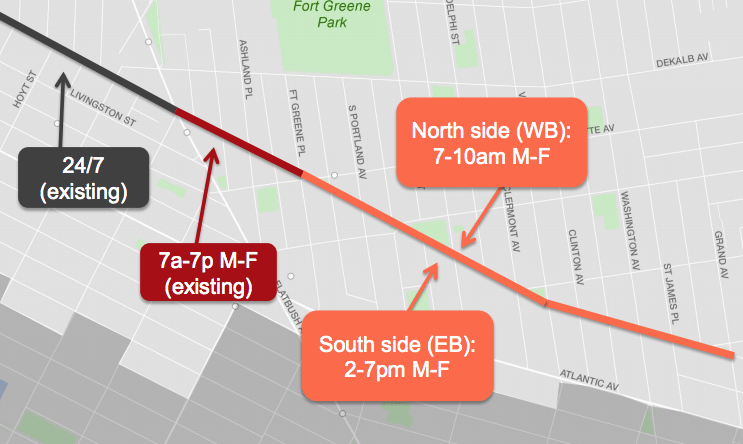
After siding with opponents of a bus lane extension on Fulton Street last week, Council Member Laurie Cumbo laid out her specific position on the project. She wants eastbound bus lane hours reduced from 2-7 p.m. to 4-7 p.m., which would slow down thousands of bus riders at one of the busiest times of day.
The DOT plan calls for bus lanes to replace curbside parking on Fulton Street between Grand Avenue and Lafayette Avenue to speed up trips on the B25 and B26 [PDF], which serve tens of thousands of trips each weekday. The bus lanes would be in effect from 7 a.m. to 10 a.m. westbound and from 2 p.m. to 7 p.m. eastbound, when ridership is highest.

More than two-thirds of households in Cumbo’s district don’t own cars and rely on transit to get around. This project would make trips to and from downtown Brooklyn faster and more reliable for residents in Fort Greene, Clinton Hill, and Bed Stuy.
Meanwhile, the main objection to the bus lanes comes from the proprietors of a Key Food on Fulton. A handful of project opponents gathered outside the store last Thursday, and Cumbo endorsed their cause on Facebook and Instagram, saying the bus lanes would eliminate “much-needed parking for residents and small businesses.”
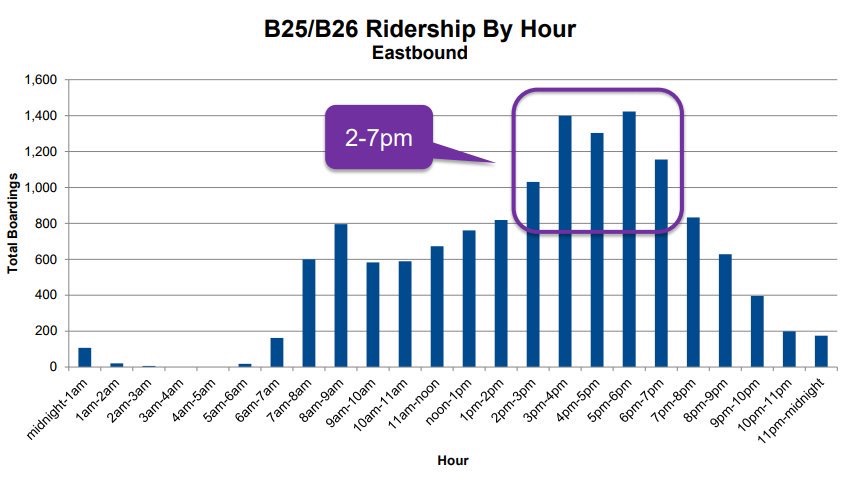
In the follow-up statement, Cumbo said the eastbound bus lane “should mirror the allotted timeframe for westbound traffic and take effect exclusively during the morning and evening rush hours.” But ridership patterns aren’t symmetrical like that. On the B25 and B26, evening ridership is higher and spread out over a longer period of time than in the morning, hence the longer evening bus lane hours in DOT’s plan.
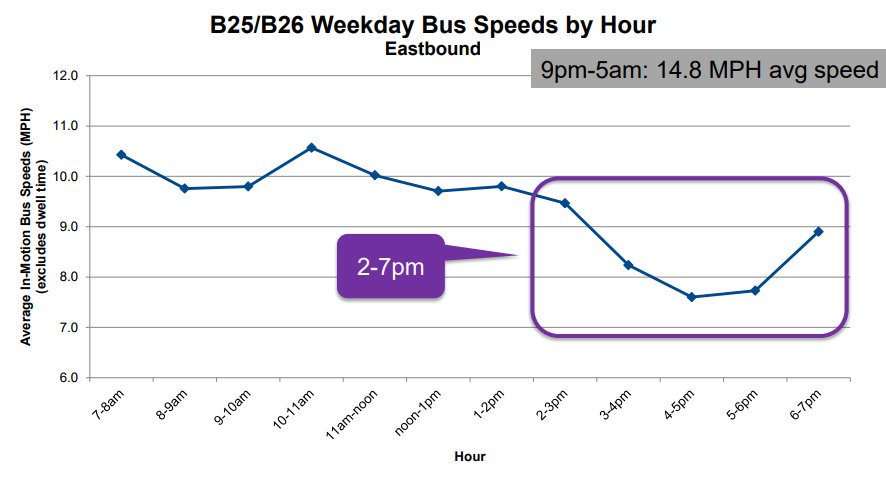
Cumbo’s proposal would take the eastbound bus lane out of effect between 2 and 4 p.m., a two-hour window when ridership approaches its peak. This is also the time of day when bus speeds fall sharply, which is partly due to the increase in traffic congestion. A bus lane would help riders bypass that traffic.
Cumbo also mentioned accommodating commercial deliveries, but loading zones don’t need to be directly in front of the store they serve. There’s no indication that her office has explored relocating delivery zones so bus riders can get a clear path during the p.m. peak.
In a new policy paper, the National Association of City Transportation Officials explains how deliveries can be shifted to side streets to make room for transit lanes on commercial streets [PDF]. On Fulton Street, where the vast majority of nearby residents do not own cars, buses should take priority.

Read More:
Streetsblog has migrated to a new comment system. New commenters can register directly in the comments section of any article. Returning commenters: your previous comments and display name have been preserved, but you'll need to reclaim your account by clicking "Forgot your password?" on the sign-in form, entering your email, and following the verification link to set a new password — this is required because passwords could not be carried over during the migration. For questions, contact tips@streetsblog.org.