A Call to Shake Up New York and New Jersey’s Anachronistic Transit Agencies
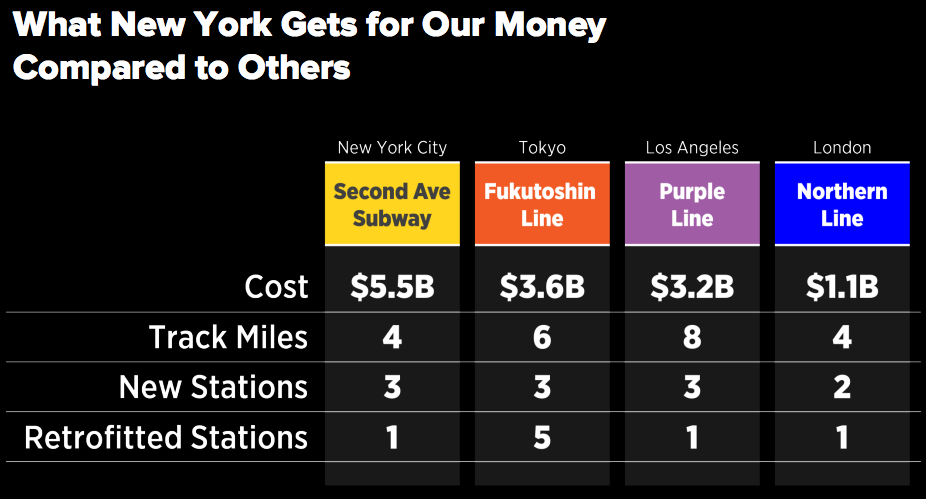
The first phase of the Second Avenue Subway, which opened years behind schedule, cost more per mile than any subway project in modern history. The ongoing East Side Access project connecting the Long Island Railroad to Grand Central Terminal is also years late and billions over budget. While cities like Paris have built dozens of miles of new rail in the last decade, the entire New York region has added just 13 miles.
There’s no shortage of known culprits for New York’s high transit construction costs — infighting between agencies, inefficient work rules, and poor contracting and procurement practices, to name a few. While public awareness of the problem has been growing in fits and starts, action to address it has been lacking. And that won’t change until there are clear consequences for the people in charge, panelists suggested this morning at the Regional Plan Association’s annual assembly.
The region’s current tangle of transportation authorities, with its surplus of turf wars and deficit of political accountability, isn’t up to the task.
“What we really need to be thinking about is the accountability and governance model. That’s the thing, I think, that undergirds all of what we’re talking about,” said DOT Commissioner Polly Trottenberg.
The agency Trottenberg leads has to navigate no fewer than three levels of government oversight and approvals — city agencies like the Office of Budget and Management, plus state and federal entities. “For [DOT] projects, there’s probably a 10 to 15 percent drag just dealing with the investigatory oversight side of the hat,” she said.
For contrast, she pointed to the creation of Transport for London in 2000, which transferred control of London’s transportation system from the national government to the city itself. The buck stops at the mayor’s desk, which ensures accountability to voters while streamlining decision-making. “The beneficiaries, the funding, the accountability — there are much clearer lines,” Trottenberg said.
“Reinventing” the region’s public authorities will be a top recommendation in the RPA’s fourth regional plan, set to be released in the fall, according to board member Rohit Aggarwala, who led the development of PlaNYC in the Bloomberg administration and now serves as chief policy officer at Sidewalk Labs.
“We are managing our transportation infrastructure through a set of organizations that are deeply flawed for the challenges that they face today: in what they control, in who they report to, in how they are organized, and in how they are funded,” he said. “The times have changed, but our institutions have not.”
Aggarwala said New York policymakers need to reconsider a model that divides the region’s transit at the Hudson River, put its airports under the same management as the PATH train, and depends on the national rail operator — Amtrak — to manage Penn Station, the region’s busiest commuter rail terminal.
A governance structure that functions more efficiently will also unlock more resources, he said. “The funding will come if the confidence is rebuilt. Other cities have the courage to recognize when their institutions have outlived their usefulness.”

Read More:
Streetsblog has migrated to a new comment system. New commenters can register directly in the comments section of any article. Returning commenters: your previous comments and display name have been preserved, but you'll need to reclaim your account by clicking "Forgot your password?" on the sign-in form, entering your email, and following the verification link to set a new password — this is required because passwords could not be carried over during the migration. For questions, contact tips@streetsblog.org.