Can America’s Most Dangerous Place to Walk Change Its Streets?

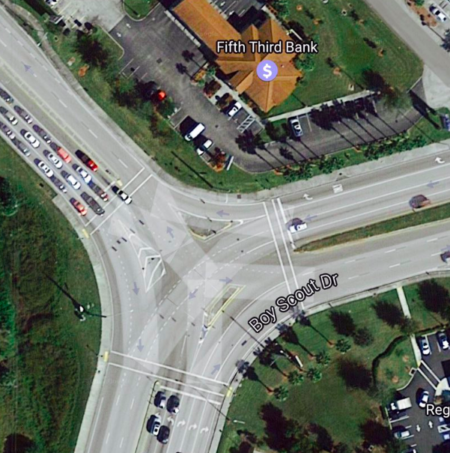
The most dangerous metro area in America for walking is Fort Myers, Florida, according to Smart Growth America’s “Dangerous by Design” report. In the last nine years, 164 pedestrians have been killed in this region of about 700,000 people.
People like Nivea Sarabia, who was killed in 2014 at age 84, trying to cross the Hancock Bridge Parkway near her home in North Fort Myers. The 45 mph road curves sharply and lacks crosswalks, reported the Fort Myers News Press. The driver in the case was not charged, because “the woman violated his right-of-way,” the paper reported.
Residents of Fort Myers are about four times more likely to be killed while walking than residents of Minneapolis. And that risk is higher among poor, elderly, black, or Latino residents.
Fortunately, Fort Myers has a committed group of reformers who have been working to address the problem. And the area has been making some strides. The advocacy organization BikeWalkLee helped secure $10 million in federal funding to redesign streets for greater safety. But the recent Dangerous by Design report shows more must be done, the organization’s leadership wrote in a column for the local paper:
The report clearly demonstrates the urgent need for increased public and private investment in pedestrian and cyclist infrastructure to make Lee County’s transportation system safer for all users. The policies are in place, and the plans are ready to go. What is needed now by all municipalities, the county, and the state is implementation — the investment of adequate funding detailed in these plans. It cannot be business as usual — safety improvements need to be on the ground as quickly as possible.
A chronic culture of danger for area walkers and bikers threatens not only residents and visitors; it undercuts our economy; threatens our ability to attract and retain businesses, workers, and families to live and work here; undermines our tourism marketing; and underlines a growing safety gap driven by socioeconomic conditions and geographic patterns.
Investments in complete streets and bike/ped strategies not only make our streets safer for all users (including motorists), they make good economic sense. Today, more and more people want to live and work in walkable communities, yet Lee County lags far behind in offering them. We know from research that sidewalks and shared use paths increase the value of homes in those neighborhoods. Bottom line: Investing in creating and maintaining walkable communities is a win/win strategy.
It’s also time for Lee County jurisdictions to focus on equity. Our most economically disadvantaged communities are the ones suffering the disproportionate share of pedestrian and bicyclist fatalities, yet investments don’t match the documented dangers. For example, much work has been done over the past five years with the Tice community with thorough identification of problems and community-supported recommendations to policymakers. However, to date, only small efforts have been taken by policymakers to implement and fund the changes requested by the community and needed to make this vulnerable community safer for walkers and cyclists.
More recommended reading today: Bike Portland reports on survey results from its bike-share system indicating that people are using it instead of driving. And the Natural Resources Defense Council says Trump’s pick to head the EPA is “the worst candidate ever nominated” for the position.

Read More:
Streetsblog has migrated to a new comment system. New commenters can register directly in the comments section of any article. Returning commenters: your previous comments and display name have been preserved, but you'll need to reclaim your account by clicking "Forgot your password?" on the sign-in form, entering your email, and following the verification link to set a new password — this is required because passwords could not be carried over during the migration. For questions, contact tips@streetsblog.org.