Study: D.C. Bike-Share Cut Neighborhood Congestion 4 Percent

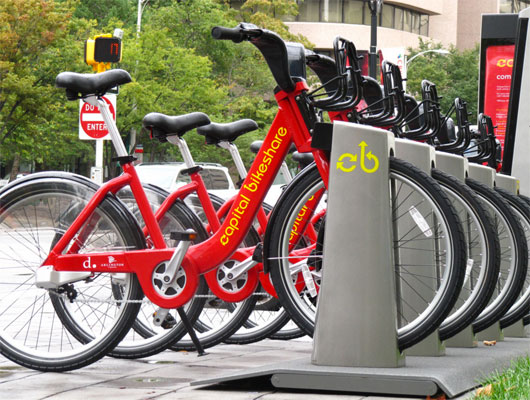
Bike-share provides a healthy, inexpensive transportation option and can help get places that would be hard to reach on transit alone. But does it reduce congestion?
Researchers with the environmental group Resources from the Future concluded last year that local traffic decreased 2-3 percent on streets near Washington’s Capital Bikeshare stations [PDF], but that congestion increased on streets farther away from stations.
Now the researchers have revised their findings, and the results suggest a more consistent traffic-reduction impact [PDF], reports Wash Cycle. Where Capital Bikeshare is available, local congestion has declined about 4 percent, they say. That may not sound like a big number, but it can result in some pretty significant benefits. The authors write:
This would reduce annual congestion costs for Washington area automobile commuters by approximately $57 per commuter, and total costs by $182 million.
In terms of social benefits, a 4% reduction in traffic congestion for our study area would imply an annual benefit of roughly $1.28 million from reductions in congestion-induced CO2 emissions.
Wash Cycle notes that this understates the case:
This value ignores any benefits from cleaner air (like NOx emissions), private cost-savings from mode-switching and any health benefits that may accrue to bicycle commuters. They also found that congestion mitigation occurs primarily in areas with relatively high congestion and that there was actually almost no spillover effect.
What we’re also reading this morning: Modern Cities explains the connection between Charlotte’s 10-mile Lynx light rail — which opened 10 years ago — and the city’s boom in walkable development. And the Transportist shares the result of a study finding that if transit stops are in areas with high pollution and traffic, the wait will seem longer.

Read More:
Streetsblog has migrated to a new comment system. New commenters can register directly in the comments section of any article. Returning commenters: your previous comments and display name have been preserved, but you'll need to reclaim your account by clicking "Forgot your password?" on the sign-in form, entering your email, and following the verification link to set a new password — this is required because passwords could not be carried over during the migration. For questions, contact tips@streetsblog.org.