With a Few Adjustments, NYPD Could Make Crash Reports Publicly Accessible

NYPD has taken a step toward making its traffic crash reports more readily available to the public.
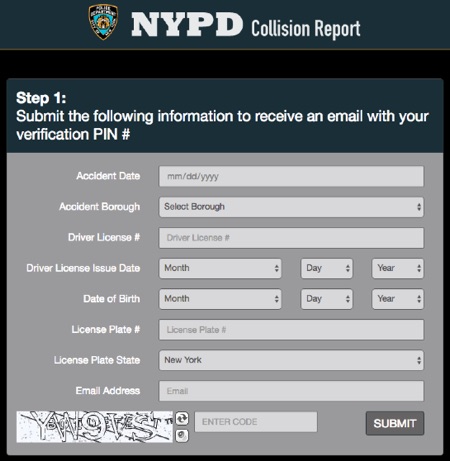
Last week the department’s IT division unveiled an online portal that allows direct access to MV-104 collision reports. By entering a drivers license number, license plate number, and a few additional details, people involved in crashes can get an MV-104 electronically.
One reason this development is promising is that it should help pedestrians and cyclists who’ve been struck by motorists get access to MV-104s, which are necessary to prove fault in civil court. But there are shortcomings with the online portal.
“I am concerned that the license plate requirement means that a cyclist cannot get their report electronically,” said Steve Vaccaro, an attorney who represents traffic crash victims, in an email to Streetsblog.
The online portal also indicates that with a few adjustments, NYPD could make all of its crash reports accessible to the public. This would shed light on the circumstances of individual crashes, and provide more public accountability for NYPD crash investigations, which typically never see the light of day. When crash reports do surface, they often reveal shoddy investigative work that tends to blame the victim.
Historically, NYPD makes it exceedingly difficult for victims’ families to obtain information following a crash. Extracting information on collisions from the department’s legal bureau requires filing a freedom of information request, an arduous and often futile exercise.
NYPD has said that opening up crash reports would expose private information like addresses and phone numbers of the parties involved in a crash, as well as witnesses.
Vaccaro says this problem should be surmountable. “The template they use to create the crash reports should automatically encrypt the fields with personal data so that the public has access to the reports, but only the participants in the crash can un-encrypt the personal information,” he said. “It certainly should get us a step closer to redacted crash reports, if it is set up properly.”

Read More:
Streetsblog has migrated to a new comment system. New commenters can register directly in the comments section of any article. Returning commenters: your previous comments and display name have been preserved, but you'll need to reclaim your account by clicking "Forgot your password?" on the sign-in form, entering your email, and following the verification link to set a new password — this is required because passwords could not be carried over during the migration. For questions, contact tips@streetsblog.org.