Making Transportation Safer for “Invisible Cyclists”

Earlier this year we wrote about the Ciudad des Luces/City of Lights program in Los Angeles — a project of the Los Angeles County Bicycle Coalition “to increase working-class Latino immigrant bicyclists’ safety and empower them to educate and spread bicycle safety information and advocacy to their communities.” The outreach is especially important because low-income Latino cyclists in L.A. are at higher risk of injury and death.

Now a study by students at UCLA’s urban planning department offers new insights into the added danger facing bike riders with few resources who operate outside mainstream cycling networks. In a summary of the study, Jonna McKone at Network blog The City Fix describes the obstacles and gives an update on Ciudad des Luces/City of Lights:
Poorer sections of cities are notorious for having more dangerous intersections and this is true of Los Angeles. Beyond faster moving traffic in residential areas of immigrant commutes, unsafe sidewalks, higher rates of violence in low-income areas, higher rates of diet-related disease along race and socio-economic lines and fewer opportunities for physical activity, under-served populations also face persistent barriers to cycling. These barriers are especially pertinent given that immigrants are more likely to cycle than native born Americans…
These cyclists – many without other transportation options – face disproportionate challenges to biking including:
Limited knowledge of cyclists’ rights due to language barriers, lack of involvement in bicycling issues, distrust of non-profits and government;
Sub-standard bicycles and safety equipment;
Limited transportation options due to price and/or proximity;
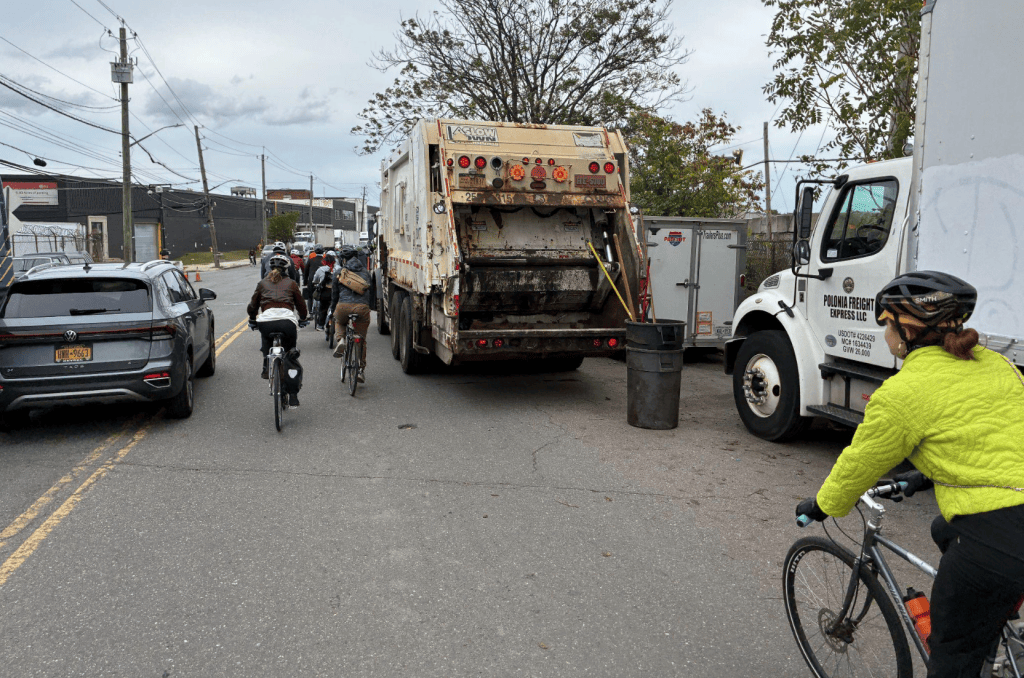
Dangerous streets with fewer provisions for safe bicycling;
Increased likelihood of bicycle theft and robbery in neighborhoods with limited infrastructure for bikes, including lack of bicycle parking; and
Lack of health insurance.
The study’s authors highlight the efforts of Ciudad des Luces/City of Lights, and McKone reports that the group is empowering Latino cyclists in Los Angeles by working to create community bike repair spaces where cyclists can congregate.
Elsewhere on the Network today: Greater City Providence argues in favor of monorail over streetcars for the city of Providence, Rhode Island. I Bike T.O. reports that the province of Ontario is considering paving the shoulders of rural roads, a potential boon for cyclists. World Changing reports on Japan’s efforts to establish 13 “Eco-Model” cities, including the city of Toyota, home to the automaker which is its namesake, which is making an effort to reduce driving.

Read More:
Streetsblog has migrated to a new comment system. New commenters can register directly in the comments section of any article. Returning commenters: your previous comments and display name have been preserved, but you'll need to reclaim your account by clicking "Forgot your password?" on the sign-in form, entering your email, and following the verification link to set a new password — this is required because passwords could not be carried over during the migration. For questions, contact tips@streetsblog.org.