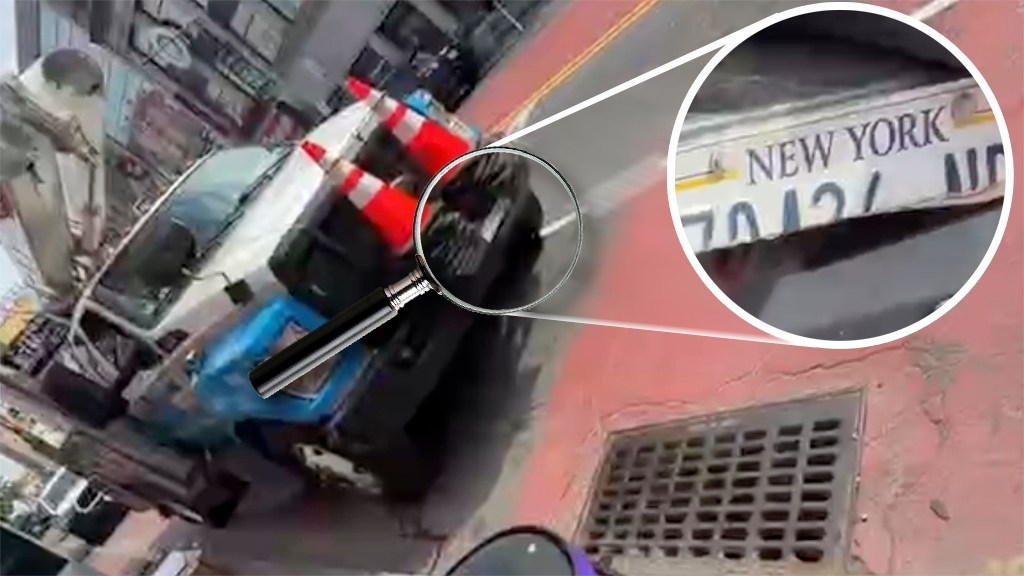
The $46 Million Parking Perk
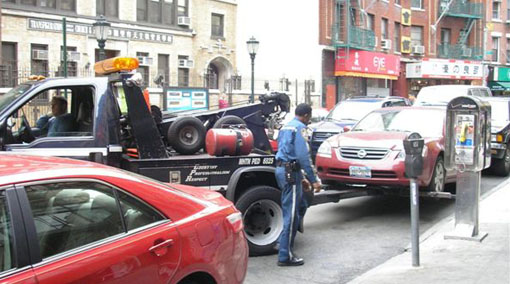
Illegally parked government employees are subtracting $46 million a year in potential parking fees from New York City’s coffers, according to a new study by transportation consultant Bruce Schaller. Eliminating government employees parking perks would not only generate revenue for the city it would also help reduce traffic congestion.
Government workers, it turns out, are twice as likely to drive to work in the Manhattan central business district compared with private sector works. Why? “Free parking has a tremendous impact on the decision whether to drive or take transit,” Schaller says.
Schaller’s analysis of 2000 Census data shows that if government workers commuted by auto at the same rate as their private sector counterparts, 19,200 fewer vehicles would enter Manhattan each day. The parking spaces freed up by these vehicles could generate $46 million annually in parking meter fees.
“You might think it’s the stock broker from Greenwich who drives to work,” Schaller says. “In fact, they’re among the least likely people to drive to work. It’s the government employee with free parking in Manhattan who is most likely to drive.”
In May, the NYPD began towing illegally parked private vehicles of government workers in Chinatown after two years of escalating complaints and a video expose produced by business and community groups with the help of Transportation Alternatives.
“They are the law enforcement people and they are breaking the law because they don’t give a [crap] about the Chinatown people,” John Hong, a merchant, says in the video. “When they come in they act like they own the street.”
Schaller’s study found that of the 177,300 government employees working in Manhattan south of 59th Street, 47,400 or 27 percent drive to work. By contrast, only 14 percent of private sector employees drive. Two-thirds of these government workers are employees of the City of New York. For these city workers, free parking amounts to a $35 million per year perquisite.
“Nearly all of these auto commuters have transit alternatives,” Schaller says. Remarkably, he found that ninety-five percent of the government employees driving into Manhattan from Brooklyn and Staten Island live in neighborhoods where the majority of their neighbors use transit.
Not only would eliminating government workers’ free parking perk raise revenue for the city, Schaller believes that it would help reduce traffic congestion on and around the clogged East River Bridges since, for most commuters, “The thing that determines whether I can drive or take the train is if I can find free parking.”
The Bloomberg administration could raise revenue for the city and reduce traffic congestion in one simple step, Schaller says, “just by reducing government employee permits.”
During his 2001 mayoral campaign, Michael Bloomberg promised that if elected mayor he would curb privileged parking. “If the average person doesn’t have special parking privileges,” Bloomberg said in a detailed July 2001 transportation policy paper, “why should those work for us … have them?”
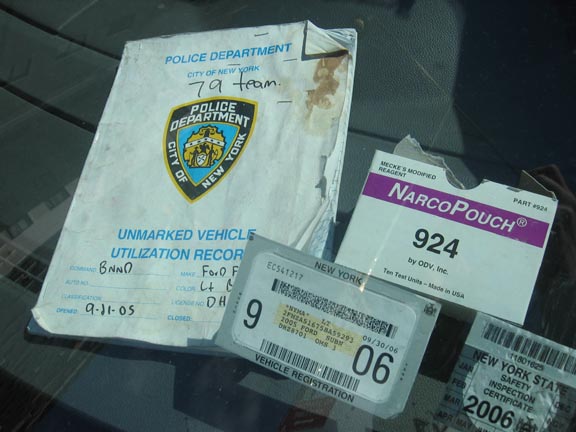
Today, many of the government parking permits that you see in windshields in Lower Manhattan and Downtown Brooklyn are forged or expired. “So, it’s not only getting rid of them, it’s about enforcing against forged permits too,” Schaller says. But that, of course, is easier said than done. “Why would the city want to enforce against their own?”
For more detail: See Clarence Eckerson’s Streetfilm on illegal government parking in Chinatown, “Dirty Little Secret.”

Read More:
Streetsblog has migrated to a new comment system. New commenters can register directly in the comments section of any article. Returning commenters: your previous comments and display name have been preserved, but you'll need to reclaim your account by clicking "Forgot your password?" on the sign-in form, entering your email, and following the verification link to set a new password — this is required because passwords could not be carried over during the migration. For questions, contact tips@streetsblog.org.