How the NYPD Abandoned Cyclists (Again) on America’s 250th Anniversary
On the Fourth of July, New York City was electric. Tall ships glided down the Hudson River, fighter jets roared overhead during a spectacular air show and a world-class fireworks display lit up the night. With the added undercurrent of World Cup excitement, it was a truly great day to be a New Yorker.
Unfortunately, for those trying to navigate the West Side on two wheels, the historic milestone revealed a frustrating truth about how the NYPD operates: they seem to believe that cars are transportation but bicycles are toys. On the 250th birthday of the United States, the NYPD’s plan for “security” put cyclists in danger.
Anticipating massive crowds, NYPD leadership decided that the pedestrian path along the Hudson was at risk of overcrowding. To manage pedestrian flow, officers diverted all foot traffic onto the adjacent bike path. Officers stationed at regular intervals with French barricades completely banned cyclists from using the bikeway.
To protect pedestrians and eliminate bike-on-pedestrian conflicts, the city gave zero consideration to where cyclists were actually supposed to go. There were no detour signs. NYPD officers on the ground received no guidance from higher-ups beyond a simple directive: ensure no bicycles touch the path.
When pressed, multiple officers offered “friendly” advice: either take a lane with vehicular traffic directly on Route 9A or use the sidewalk on the east side of the road. The former is a safety hazard and the latter is illegal.
Predictably, the eastern sidewalk was a non-starter. It was full of pedestrians and NYPD officers, and narrowed further by lines of metal French barricades, making cycling impossible. Left with no choice, I and many other frustrated riders opted for the only open space left: taking a lane on Route 9A with speeding vehicles.
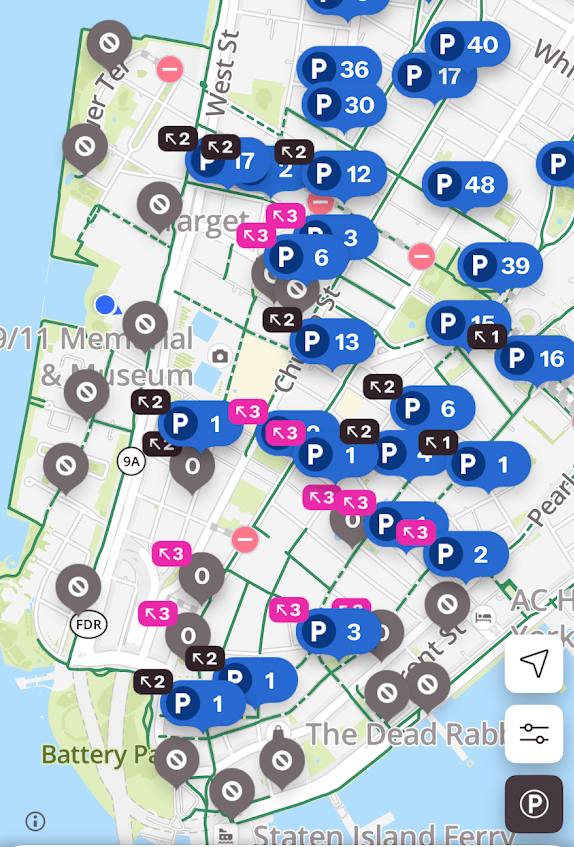
While we made it through safely, it was a high-stress ordeal on a high-speed roadway. To make matters even worse, while vehicle driving and parking regulations along the corridor seemed completely untouched, the NYPD forced Citi Bike to entirely shut down all docking stations adjacent to both the Hudson and East Rivers.
This brings us to the core issue that Streetsblog readers know all too well: the NYPD completely ignores cyclists when it draws up event plans. We know its officers are capable of handling massive crowds, such as the one that attended the ticker-tape parade for the Knicks on June 18. But the agency still struggles to understand that cycling is transportation.
Closing the Hudson River Bikeway — the single most heavily utilized cycle path in the United States — without providing an alternative is logistical malpractice. Protecting one group of New Yorkers from harm does not require sacrificing the safety of another.
Overlapping government fiefdoms only exacerbated the problem. The New York State Department of Transportation maintains and operates Route 9A and the Hudson River bicycle path, while crowd control for special events like the Fourth of July fall on the NYPD. These agencies clearly did not coordinate before the holiday.
This breakdown was particularly infuriating because vehicle traffic along Route 9A was exceptionally light on the 4th. The temporary conversion of a single driving lane into a protected bike lane would not have posed the slightest inconvenience to motorists. It is impossible to imagine closing a major vehicular artery without so much as a detour sign, yet the relevant authorities continue to expect the cycling public to figure it out for themselves.
We need to find a solution before the next major celebration. I hope we can correct this policy well before the nation’s 275th anniversary in 2051. Cyclist safety shouldn’t have to wait another quarter-century.

Gary Roth is a graduate of Columbia University GSAPP, a former adjunct professor of urban planning, and works in the transportation space. He resides in Chelsea and commutes daily by Citi Bike.
Read More:
Streetsblog has migrated to a new comment system. New commenters can register directly in the comments section of any article. Returning commenters: your previous comments and display name have been preserved, but you'll need to reclaim your account by clicking "Forgot your password?" on the sign-in form, entering your email, and following the verification link to set a new password — this is required because passwords could not be carried over during the migration. For questions, contact tips@streetsblog.org.