‘Pay-to-Play’ Jersey Rep. Josh Gottheimer Wants to Kill Citizen Idling Enforcement That Protects NYC Air
Idle (enforce) no more.
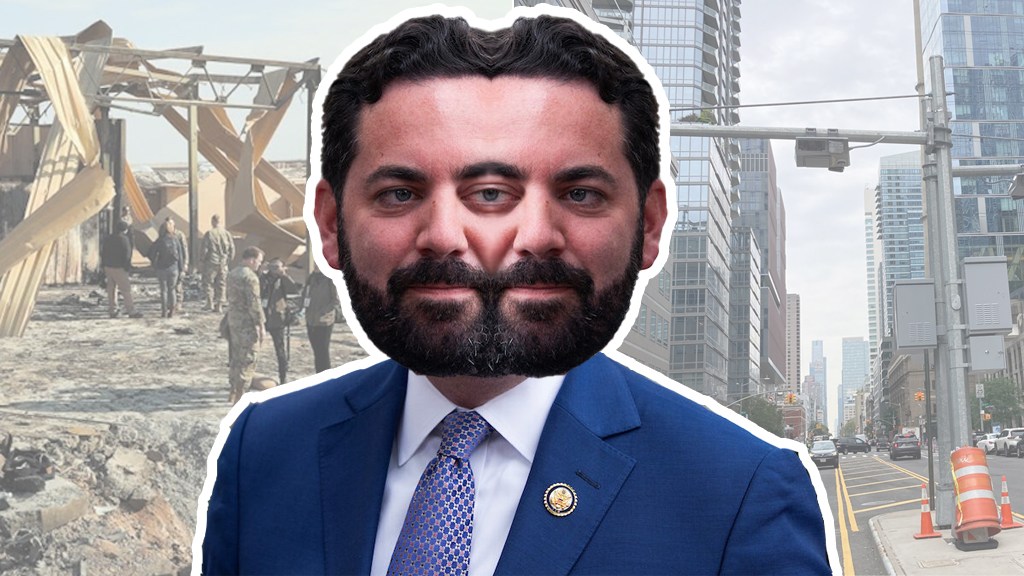
New Yorkers would no longer be able to collect a portion of the fine paid by violators of the city’s half-century-old anti-idling law under legislation proposed by U.S. Reps. Josh Gottheimer (D-N.J.) and Nick Langworthy (R-Elmira) in what one critic dubbed classic “pay-to-play” corruption.
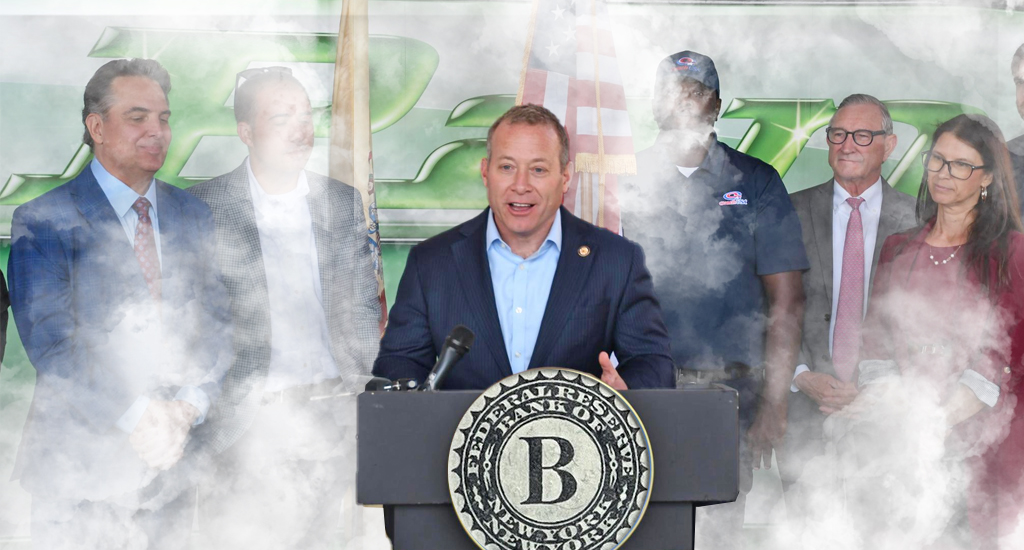
Gottheimer, who proposed similar legislation to try to kill congestion pricing, analogized the two during a press conference on Tuesday in Manhattan — referring to clean-air enforcement as an “idling tax,” much like he called congestion pricing a “congestion tax.”
“Under current New York City law, each day, motorcoach buses are being fined thousands of dollars while safely trying to load passengers or utilize wheelchair lifts for disabled passengers,” Gottheimer said, referring to a scenario that does not, in fact, result in a ticket. But he pressed on: “This bus idling tax is a Ponzi scheme with a bunch of bottom feeders running around the city with cameras to stick it to hard-working bus drivers who are just trying to do right by their passengers.”
Enacted during the Lindsay administration to coincide with the first Earth Day, the city’s anti-idling law was sparsely enforced — even with a “bounty” option technically in effect — before the launch of the Citizens Air Complaint Program in the late 2010s. The program allowed everyday New Yorkers to submit complaints about idling commercial vehicles and receive a portion of any resulting fine paid by the companies if the Department of Environmental Protection confirms that a violation occurred.
DEP has doled out hundreds of thousands of idling fines submitted by citizen enforcers, who must capture idling vehicles on film and submit the complaints via a DEP portal. Under Mayor Eric Adams and his DEP Commissioner Rohit Aggarwala, the agency leveraged the fines to win fleet electrification commitments from several armored car companies (though several companies ended up not complying and are back facing enforcement).
Mayor Mamdani recently touted his administration’s efforts to collect on $9 million worth of idling tickets owed by Amazon — something Gottheimer referenced twice on Tuesday — but Mamdani’s DEP has yet to weigh in on the growing legal and legislative threats to the larger citizen-enforcement program. Reps for City Hall and DEP did not return multiple requests for comment.
Contrary to Gottheimer’s claims, buses cannot receive violations for idling while loading or unloading passengers. His bill would not only ban citizen complainants from receiving bounties for violations, but also set a nationwide standard for how long buses can idle (15 minutes) and prevent members of the public from suing bus companies under the federal Clean Air Act.
The American Bus Association, which represents bus operators like Peter Pan, Trailways and Coach USA, has also sued in federal court to kill the program, which the bus industry argues violates the equal protection and due process clauses of the Constitution.
At the same time, City Council members have proposed several changes to the program: Council Member Alexa Aviles (D-Sunset Park) has proposed requiring the city to expand language access on its complaint portal (Intro 48). A proposal by Council Speaker Julie Menin (D-Upper East Side) would increase maximum idling fines (Intro 11). And Council Environment Chair James Gennaro (D-Queens) has a proposal that builds on a 2024 effort backed by then-DEP Commissioner Aggarwala to reduce citizen bounties and add a number of exemptions and caveats to the program, including for school buses (Intro 561).
A Council hearing on Menin and Gennaro’s bills that has been scheduled for Wednesday was abruptly postponed to October after Streetsblog reached out for comment last week. A spokesperson for Menin did not say why the hearing was postponed, or whether the Speaker supports Gennaro’s bill, which is opposed by clean-air and transportation advocates.
Speaking to Streetsblog on Tuesday, American Bus Association President Fred Ferguson said the industry has taken an all-of-the-above approach to fighting the city’s idling enforcement, including opposing Menin’s Intro 11.
The environmental benefits of bus transportation versus cars outweigh the negatives of idling, Ferguson said. He said idling is necessary for pre-trip safety checks, indoor temperature control and operating wheelchair lifts, and that it’s not fair that MTA buses do not face the same enforcement.
“I think it comes down to, what is the problem that enforcement and regulation is trying to solve?” he said. “The bus companies don’t want their drivers idling any more than they have to.”
Gottheimer, Ferguson and their colleagues took particular issue with the financial incentives for members of the public who submit successful.
“New York … is the outsourcing of the enforcement to the citizen bounty hunters,” Ferguson said.
Supporters of the program, meanwhile, dinged Gottheimer and Langworthy for taking donations from the bus industry. Gottheimer and Langworthy have received $4,000 and $1,500, respectively, during the current election cycle, according to publicly available federal data.
“Josh Gottheimer’s bill smacks of pay-to-play politics,” said former City Council Member Helen Rosenthal (D-Upper West Side), who wrote the 2018 bill that tasked DEP with standing up a program for collecting citizen complaints. “After taking tens of thousands of dollars in campaign donations from the bus and trucking industries, he announces federal legislation targeting New York City.
“The issue is not who enforces the law, the issue is that pollution from bus and truck idling is linked to diseases like asthma, dementia, and heart disease,” Rosenthal added. “If Gottheimer wants to protect seniors, children, and people with disabilities, we need common sense legislation to require the bus and truck industry to shift from diesel to electric vehicles — the federal government could do that.”
The New York Clean Air Collective, which represents some of the citizen enforcers, called on the Council to reject restrictive changes to the program.
“Council members need to ask: who benefits from [removing citizen enforcement]? It’s certainly not children, seniors, or the 3,200 New Yorkers who die prematurely each year from air pollution,” said Clean Air Collective member George Pakenham. “The only winners from this bill are trucking and private bus companies, because throttling DEP’s enforcement will immediately hand these corporate polluters between $60 and $200 million, plus millions more in every future year. That’s money that won’t be available for schools, parks, and health care in our city. Why?”

Read More:
Streetsblog has migrated to a new comment system. New commenters can register directly in the comments section of any article. Returning commenters: your previous comments and display name have been preserved, but you'll need to reclaim your account by clicking "Forgot your password?" on the sign-in form, entering your email, and following the verification link to set a new password — this is required because passwords could not be carried over during the migration. For questions, contact tips@streetsblog.org.