Opinion: How American vs. Danish Pedestrian Laws Stack Up
The subtle wording of American pedestrian safety laws reveals a lot about whose lives we prioritize on our roads — especially compared with the same policies in Denmark.
By
Andy Boenau
12:01 AM EDT on August 20, 2023
Editor’s note: a version of this article originally appeared on Urbanism Speakeasy. It is republished with permission.The Governors Highway Safety Association is crunching numbers on pedestrian fatalities, and they expect the final tally to be 7,508 people killed while walking in 2022. That’s the most since 1981. In their words:

Between 2020 and 2021, pedestrian deaths increased 16%, while other traffic fatalities increased 10 percent. More alarmingly, since 2010, pedestrian deaths have gone up a shocking 77 percent, compared to a 25 percent increase in all other traffic fatalities.To help understand these statistics, let’s compare the word in American and Danish laws when it comes to how the lives of a pedestrians are treated.
The Danish Mindset: “We’ll slow down in case you need to cross.”
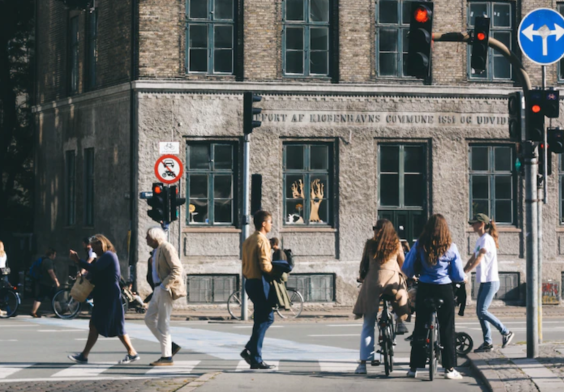
Long ago, the Danes adopted a proactive and protective approach toward pedestrians. Here’s an excerpt Danish Traffic Act § 27:Drivers who approach a pedestrian crossing that is not regulated must adjust their speed in such a way that there is no danger or inconvenience to pedestrians who are in the crossing or are on their way into it. If necessary, the driver must stop to let pedestrians pass.The motorist is responsible for not endangering or inconveniencing pedestrians, even before those pedestrians reach a designated crosswalk. This is a pragmatic application of the “streets are for people” slogan: giving vehicular traffic the back seat. Here’s the part that’s so un-American about the Danish Traffic Act: motorists are required to adjust their speed in such a way that there is no inconvenience to pedestrians who are are on their way into the street. No inconvenience. Can you imagine?! Maybe a person steps off the curb, maybe they don’t. Maybe the stroller dips into the crosswalk, maybe it doesn’t. The point is that whenever there’s a potential conflict, pedestrians are given the priority.
The American Mindset: “We’ll hit the brakes when your foot hits the street.”
In the U.S., by contrast, motorists are typically given the right-of-way until a pedestrian begins crossing — a.k.a., until the baby stroller is already in harm’s way. That’s because American transportation professionals have fooled themselves into thinking travel modes can be balanced. Let’s be clear: there is no such thing as multimodal balance. Someone always gets top priority, and in the US, the legal framework reinforces the perverse incentives of motordom. (See Fighting Traffic by Peter Norton.)

New York
New York State Vehicle and Traffic Law Section 1151:When traffic-control signals are not in place or not in operation, the driver of a vehicle shall yield the right of way, slowing down or stopping if need be to so yield, to a pedestrian crossing the roadway within a crosswalk on the roadway upon which the vehicle is traveling, except that any pedestrian crossing a roadway at a point where a pedestrian tunnel or overpass has been provided shall yield the right of way to vehicles.
California
California Vehicle Code Section 21950:The driver of a vehicle shall yield the right-of-way to a pedestrian crossing the roadway within any marked crosswalk or within any unmarked crosswalk at an intersection.
Massachusetts
Massachusetts General Laws Chapter 89 Section 11:When traffic control signals are not in place or not in operation the driver of a vehicle shall yield the right-of-way, slowing down or stopping if need be to so yield, to a pedestrian crossing the roadway within a crosswalk marked in accordance with standards established by the department of highways if the pedestrian is on that half of the traveled part of the way on which the vehicle is traveling or if the pedestrian approaches from the opposite half of the traveled part of the way to within 10 feet of that half of the traveled part of the way on which said vehicle is traveling.

Andy Boenau is an author, filmmaker, podcaster, and writer of the Urbanism Speakeasy Substack. Find him @Boenau on Twitter and LinkedIn.The post Opinion: How American vs. Danish Pedestrian Laws Stack Up appeared first on Streetsblog USA.

Andy Boenau is a writer and filmmaker. Read his Substack at https://urbanismspeakeasy.com.
Read More:
Streetsblog has migrated to a new comment system. New commenters can register directly in the comments section of any article. Returning commenters: your previous comments and display name have been preserved, but you'll need to reclaim your account by clicking "Forgot your password?" on the sign-in form, entering your email, and following the verification link to set a new password — this is required because passwords could not be carried over during the migration. For questions, contact tips@streetsblog.org.
More from Streetsblog New York City
Mamdani Will Rebuild the BQE to Last Until 2080 Despite Calls to Tear it Down
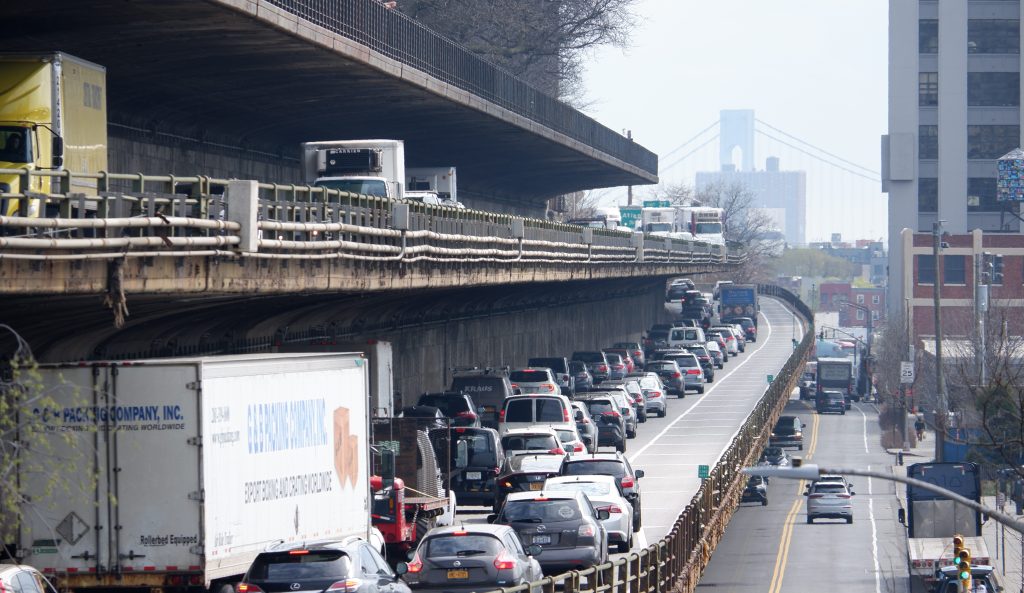
Mayor Mamdani wants to build a temporary bypass road to allow for a 10-year, $4-billion rebuild of the BQE triple-cantilever.

August 24, 2026
Uber and Waymo Have Spent More Than $15M This Year Lobbying New York Pols
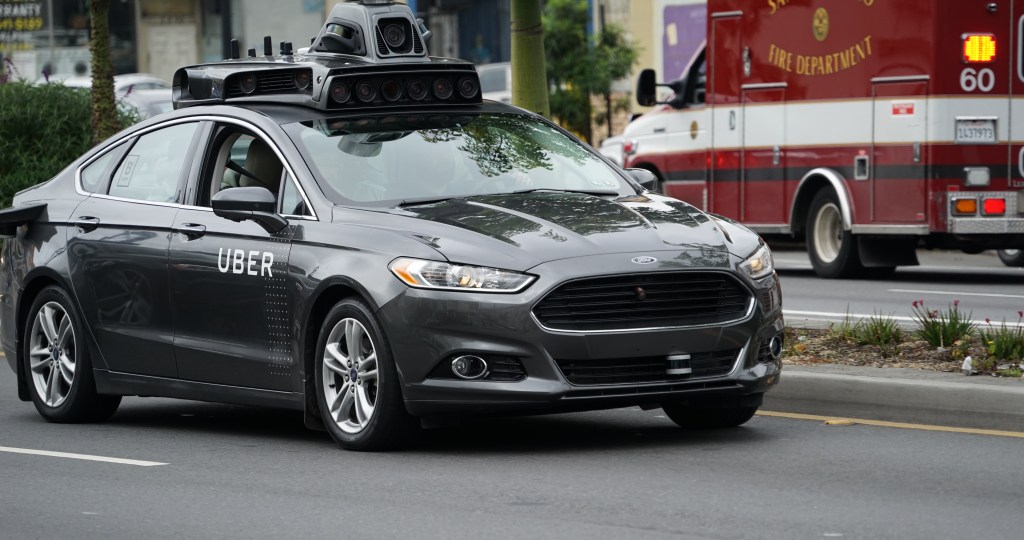
So much for affordability. Big Tech spent massive sums to back it's state legislative aims this year.

August 24, 2026
Monday’s Headlines: Time for Action Edition
Transportation Alternatives has called for a "die-in" outside City Hall this coming Wednesday amid impatience with the city's slow progress toward eliminating traffic deaths after hit-and-run drivers killed killed three cyclists in the span of three days last week.

August 24, 2026
Hit-and-Run Drivers Killed Three Cyclists in Three Days
Advocates called on the mayor to take action after a BMW driver allegedly struck Mamadou Diallo, of Canarsie, head-on before fleeing the scene.
August 21, 2026
City Floats Busway, Parking Maximums to Ease Traffic from Red Hook Redevelopment
Red Hook and the Columbia Street Waterfront could finally get a working bus as the city plans 6,000 more homes for the area.
August 21, 2026