The Transformation of Queens Boulevard, Block By Block

For many years, New York City’s Queens Boulevard was known as the “Boulevard of Death.” The street cuts through the heart of the Queens, expanding at some points to a chaotic 12 to 16 lanes of traffic — which makes it extremely dangerous for human beings. From 2003 to 2013, 38 pedestrians and cyclists were killed and 450 suffered severe injuries.
Last year, the New York City DOT announced a $100 million dollar commitment from the de Blasio administration to humanize Queens Boulevard and make it safer, a flagship project in the city’s Vision Zero initiative. Instead of waiting until the planned permanent reconstruction in 2018 to make any changes, DOT wanted to build in safety improvements immediately. After holding public workshops with communities along the corridor, 1.3 miles of Queens Boulevard have been redesigned, and the changes are already making a huge difference.
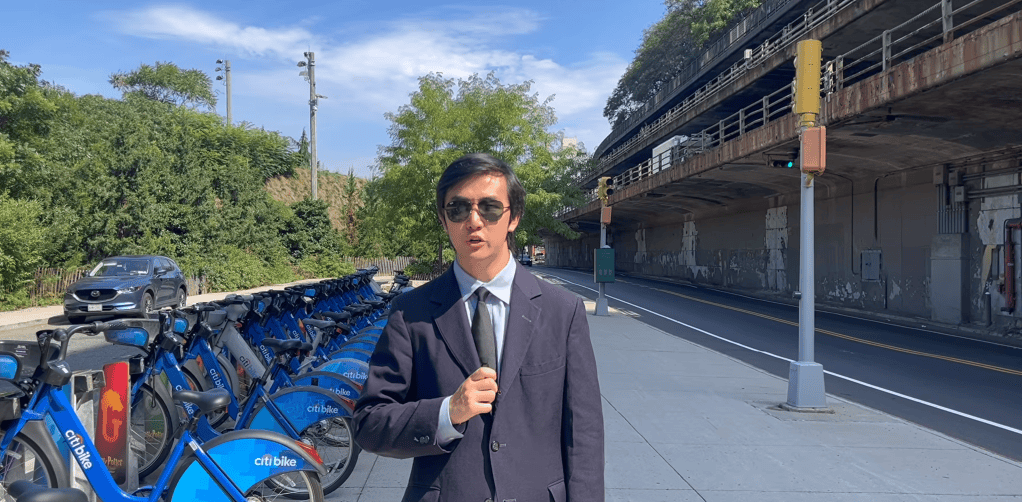
If you’re an urban planner, transportation engineer, or advocate wondering just what can be done with what seems to be an irredeemably messed up street, then this is the Streetfilm for you. We got an exclusive tour of the changes with NYC DOT Deputy Commissioner Ryan Russo, going block-by-block over the creative solutions the DOT team implemented. Queens Boulevard is as complicated a roadway as there is: Nearly every block is different. To add a functional bike lane and pedestrian mall seemed highly unlikely. Yet here it is.
I’ll admit, I’m especially excited about this project since I’ve lived near Queens Boulevard for years. I was skeptical when the announcement was made that I would see any truly life-altering change, and even if the city pulled it off, it would take years and years. But the installation has been swift and extremely well thought out. The service road is noticeably slower, narrower, and easier to navigate for people walking or biking. So much so that I was motivated to document the transformation with this Streetfilm, which I hope will be a learning tool that people can put to use in their communities. If you can put a good protected bike lane on Queens Boulevard, then just about any street in America should be in play.
In 2015, no one was killed on Queens Boulevard.

Read More:
Streetsblog has migrated to a new comment system. New commenters can register directly in the comments section of any article. Returning commenters: your previous comments and display name have been preserved, but you'll need to reclaim your account by clicking "Forgot your password?" on the sign-in form, entering your email, and following the verification link to set a new password — this is required because passwords could not be carried over during the migration. For questions, contact tips@streetsblog.org.